


2026-08-13 15:57:54
Case introduction
Clinical background
Patient, male, 51 years old, with 30 years of smoking history, consulted for abdominal pain and constipation. A mass was found in the splenic flexure during colonoscopy and a biopsy was performed. The pathological results were consistent with moderately differentiated colon adenocarcinoma, and the patient underwent surgery in July 2015. The diagnosis is T4N0 colon adenocarcinoma. 20 lymph nodes were removed and no risk factors were found. The patient was followed up after 8 cycles of CapeOx adjuvant chemotherapy. At the time of diagnosis of colon cancer, the patient had no known comorbidities and had not received any routine medical treatment.

Timeline of the patient's clinical course
Treatment process
In February 2025, a 61-year-old male asymptomatic patient underwent screening due to a history of colon cancer, and a chest CT scan revealed a 19 mm nodule in the right lung. The lung lesion was considered to have been found incidentally in the routine follow-up imaging of the previous colon cancer, and there was no clinical or pathological evidence suggesting metastatic disease.
Therefore, surgical wedge resection was chosen for a clear diagnosis. According to the 8th edition of the TNM staging of lung cancer, the staging of the lung tumor was pT1bN0 during the operation. The biopsy of the mass in the middle lobe of the right lung detected adenocarcinoma, and the biopsy of the diaphragm and visceral pleura also detected adenocarcino-ma infiltration. The immunohistochemical staining of the nodule showed that the tumor cells were TTF-1, CK7 and NAPSIN-A positive. Because CK20, CDX2, and SATB2 were negative, it was evaluated as second primary (lung adenocarcinoma). According to the results of histopathology and immunohistochemistry, the lung adenocarcinoma was evaluated as a second primary malignant tumor, rather than a metastasis from colon cancer.
Genetic testing of the pathological sample revealed a G719A mutation in exon 18 of the EGFR gene and a L861Q mutation in exon 21, and PD-L1 was 0%.
The patient visited the oncology department in May 2025 with the above results. The new postoperative PET-CT shows a sub-centimeter nodular lesion (SUVmax: 815) at the inner pleura of the upper lobe of the right lung, located at the T3 vertebral body level;There is a high-metabolic lymph node (12 × 12 mm, SUVmax: 5. 85) in the mediastinal area adjacent to the trachea (Figure 1).The postoperative staging showed involvement of the pleura and adjacent trachea, and the staging was updated to IVA (M1a).
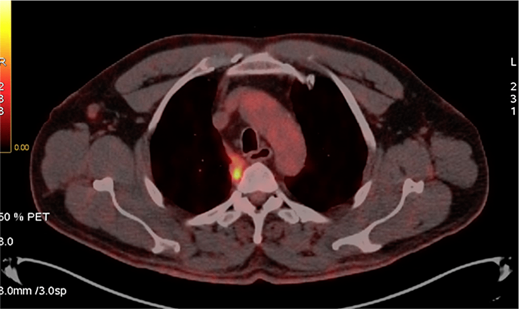
Figure 1
The patient began to receive first-line treatment, taking 80 mg of osimertinib orally daily. At the age of 3 months, PET-CT showed that all FDG high-uptake target lesions had completely disappeared, achieving complete remission. All target lesions disappeared, and FDG uptake decreased to the background level.
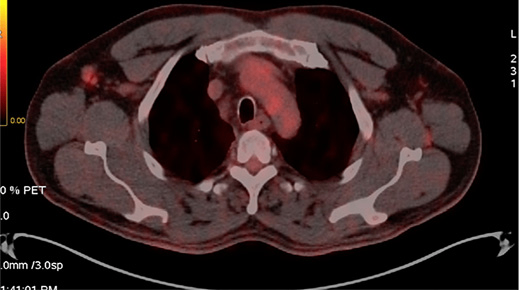
Figure 2
At the 7-month follow-up, remission persisted, and the only side effect was a grade 1 acne-like rash. This case shows that osimertinib can achieve early, deep, and durable remission in patients with the rare G719A/ L861Q co-mutation. Provide prospective evidence for rare EGFR subtypes.
Discuss
At present, there is only afatinib approved for the two rare EGFR gene mutations G719A and L861Q, And the scope only includes the three subtypes S768I, L861Q, and G719X (In 2018, the FDA expanded the first-line indication of afatinib for the treatment of patients with metastatic non-small cell lung cancer (NSCLC) with non-drug-resistant rare EGFR mutations (L861Q, G719X, and/or S768I). ) It has been 8 years since a new drug targeting these mutations has been approved, and although the osimertinib used by the patient in this article has not been officially approved, However, it has long been included in the NCCN guidelines for non-small cell lung cancer, and the guidelines recommend that patients carrying EGFR S768 I, L861Q, and/or G719X should be treated with afatinib or osimertinib as the first-line treatment.
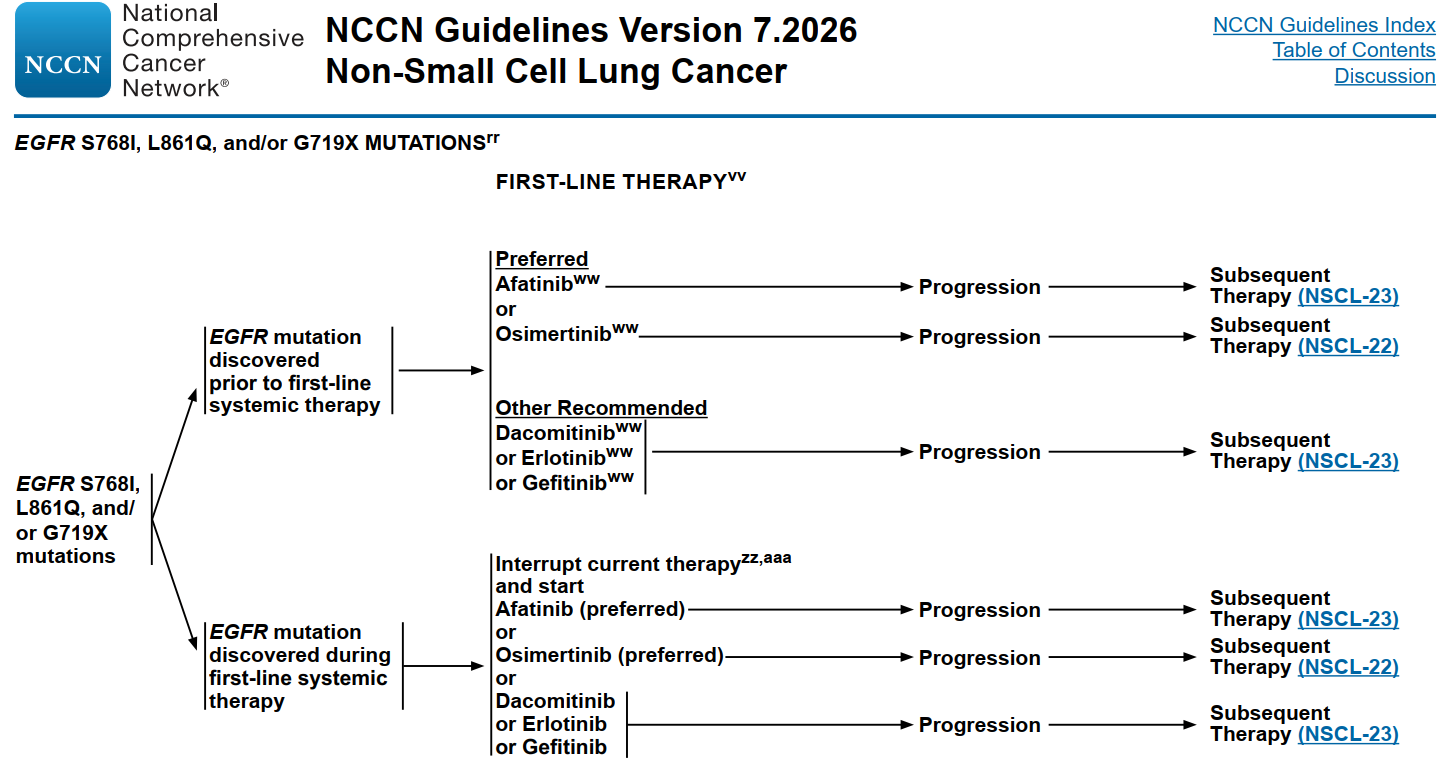
Non-small cell lung cancer NCCN guidelines
At the same time, the 2026 CSCO (Chinese Society of Clinical Oncology) NSCLC (non-small cell lung cancer) guidelines were updated, and the IV-stage treatment plan for the EGFR mutation type mentioned in this article was updated. Osimertinib and afatinib have been added to the treatment regimen for G719X/ S768I/ L861Q and PACC mutations other than G719X / S768I, and are recommended at level II. The PACC mutations covered by the regimen include the regions shown in the chart.
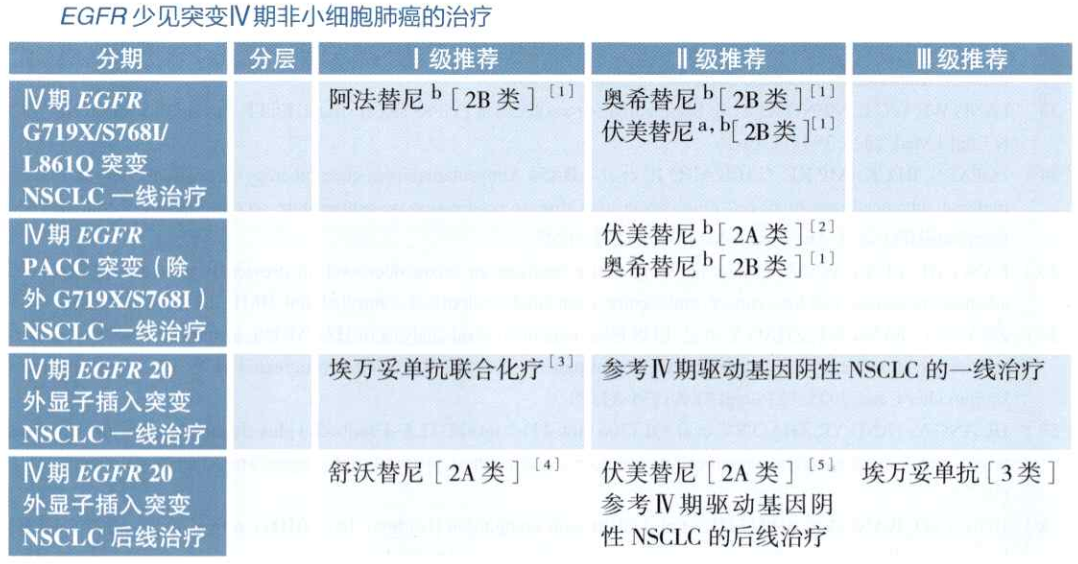
CSCO Non-Small Cell Lung Cancer Diagnosis and Treatment Guidelines (2026 Edition)
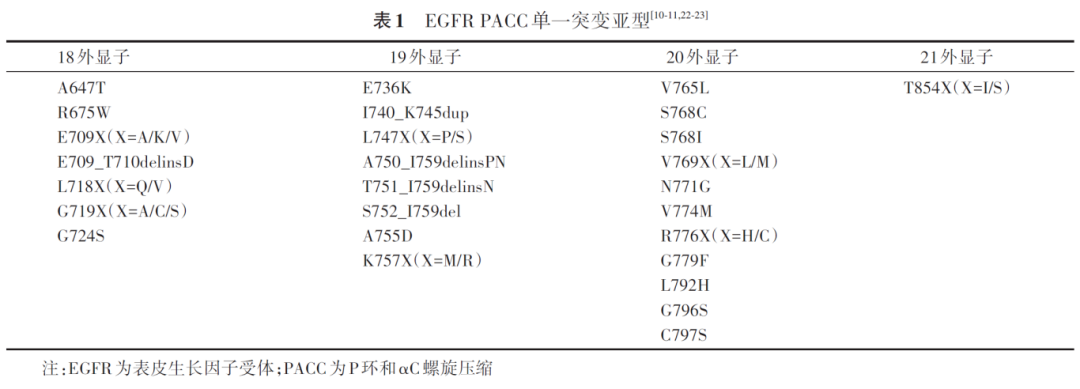
EGFR PACC single mutation subtype table
Case Suggestions
1. The benefit case of osimertinib in this article suggests that the scheme of treating rare EGFR mutations with third-generation EGFR-TKI has potential value. At the same time, the side effect is low, and the patient's tolerance is good (afatinib, the only approved indication, is often criticized for its toxicity), and the combination of rare mutations is rarely reported in the literature, which has certain reference value.
2. The data from the genetic test helped confirm that the patient had newly diagnosed lung adenocarcinoma, which gave clinicians the opportunity to provide more precise personalized treatment based on the patient's condition, indicating the necessity of genetic testing for patients with advanced or recurrent tumors.
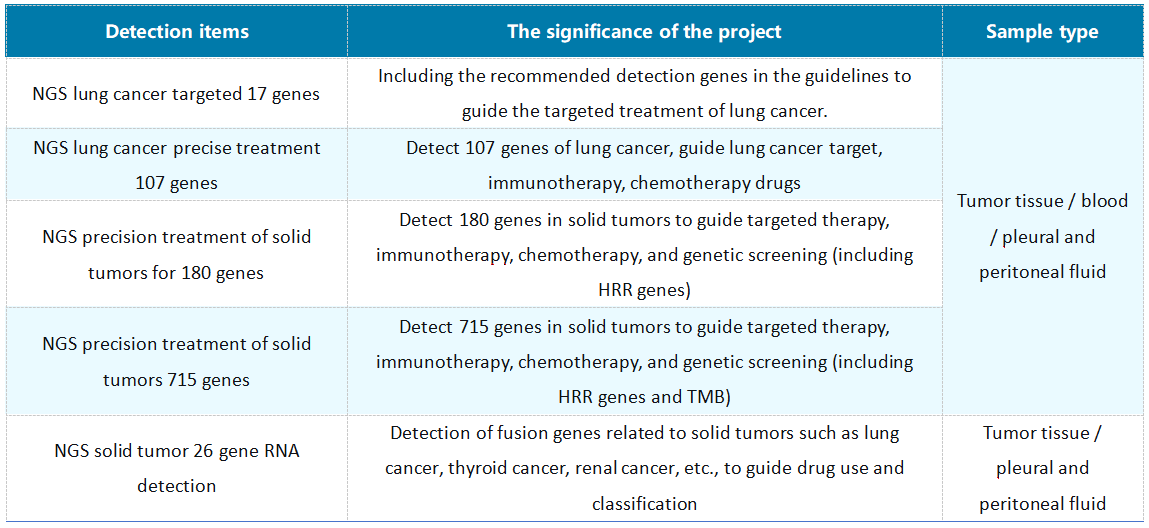
Virchow's Laboratory Lung Cancer Precision Detection Scheme
References::
[1] Chinese Society of Clinical Oncology Non-small Cell Lung Cancer Expert Committee, PACC Expert Consensus Writing Group. Expert Consensus on Diagnosis and Treatment of Advanced Non-small Cell Lung Carcinoma with EGFR PACC Mutation (2025 Edition) [J]. Chinese Journal of Cancer, 2025, 47(9): 811-819.
[2] Wang Yang, Li Min, Hu Chengping. Rare mutations of EGFR gene in non-small cell lung cancer and progress of targeted therapy [J]. Chinese Medical Journal, 2019, 99(2): 154-167.
[3] CSCO Non-Small Cell Lung Cancer Diagnosis and Treatment Guidelines 2026.
[4] Saray S, Yılmaz T, Bozkurt H. Stage 4A Lung Adenocarcinoma with Rare EGFR Exon 21 L861Q and Exon 18 G719A Co-Mutations Showing Complete PET-CT Response to Osimertinib: A Case Report. Case Rep Oncol. 2026 Mar 30;19(1):639-646.
[5] NCCN Guidelines Version 7.2026 Non-Small Cell Lung Cancer.