
CN EN
X
CN EN
New product launch - 26-gene RNA detection for solid tumors, improved fusion gene detection, more targeted benefits

2026-07-09 15:18:43

In the era of precision oncology, genetic testing has become the core means of guiding targeted therapy. However, many patients face a dilemma: the DNA level test does not find a drug target, but there is still hope for treatment - the problem may be that the "fusion gene" is missed. In order to meet the clinical needs, our company has launched a 26-gene detection package at the RNA level, which has greatly improved the detection rate and accuracy of gene fusion, and provided more possibilities for targeted drug use for tumor patients.


  • Expert consensus memorization

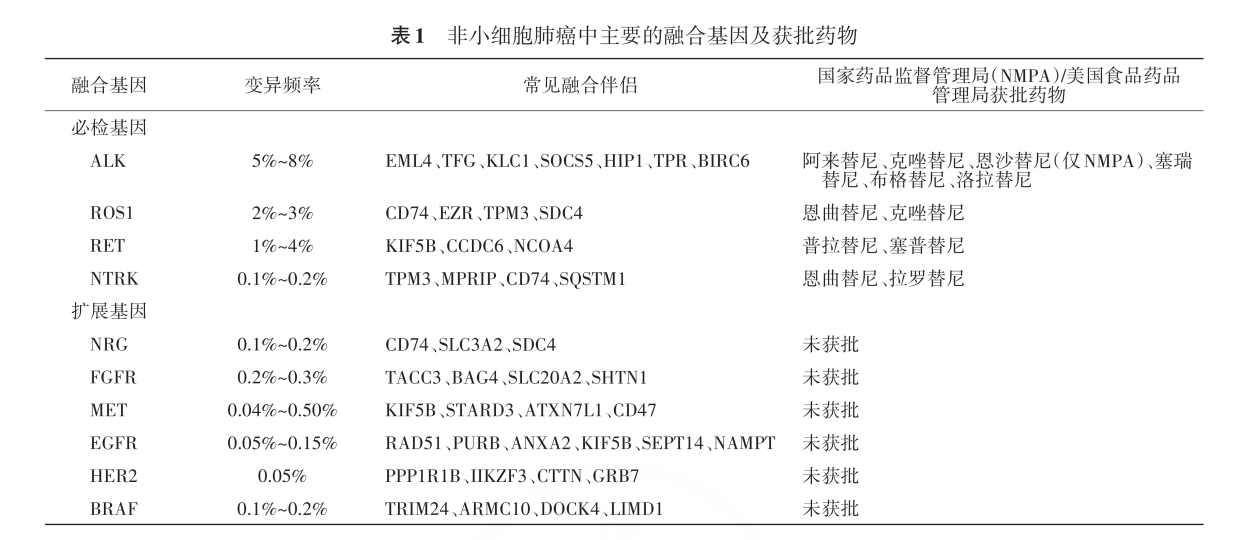
In clinical practice, non-small cell lung cancer (NSCLC) is the most common type of cancer in which fusion gene detection and targeted drug treatment are effectively combined. The "Chinese Expert Consensus on Clinical Practice of Fusion Gene Detection in Non-small Cell Lung Cancer" summarizes the most common and must-be-examined fusion genes in clinical NSCLC. Our company's solid tumor 26 gene RNA detection product includes all the fusion genes listed in the consensus, and expands to cover more potential detection scope.
图片1.png

Figure 1: Non-small cell lung cancer experts recommend detecting gene fusions

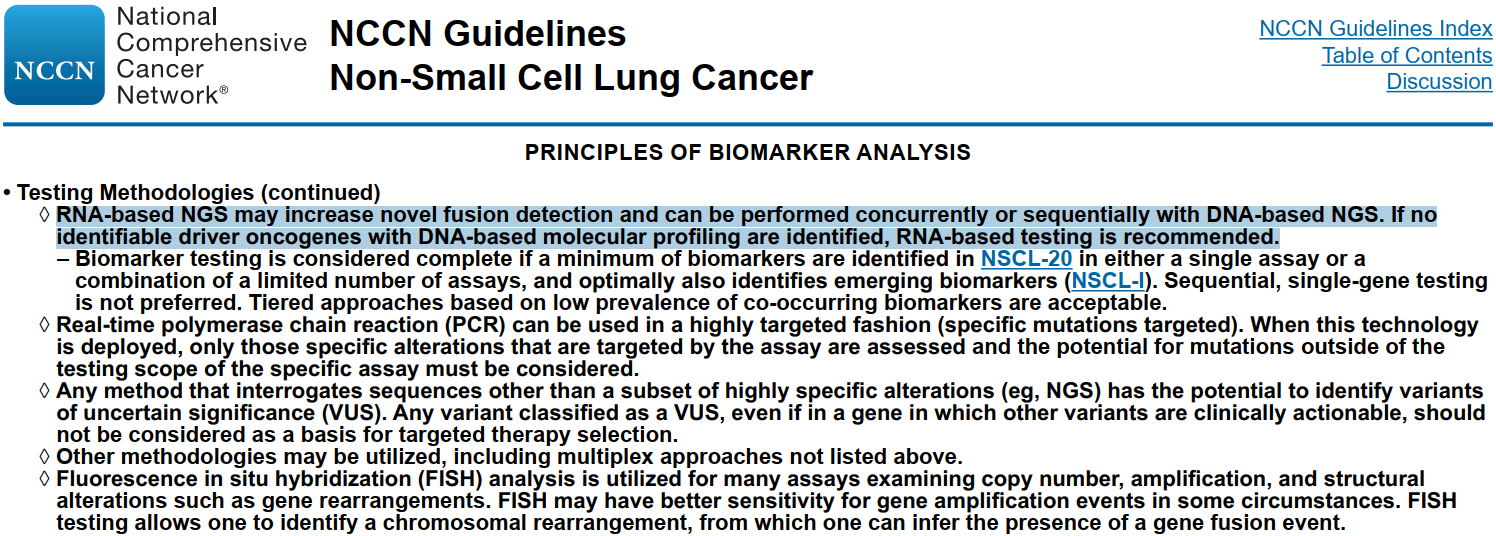
In the NCCN guidelines for non-small cell lung cancer with global guiding value, the expert group emphasized that RNA-based NGS detection can improve the detection rate of new fusion genes, and can be performed simultaneously or sequentially with DNA-based NGS. If the DNA-based molecular spectrum analysis does not identify a recognizable driver oncogene, RNA-based detection is recommended.


图片2.png

Figure 2: NCCN non-small cell lung cancer guidelines recommend RNA-based NGS testing

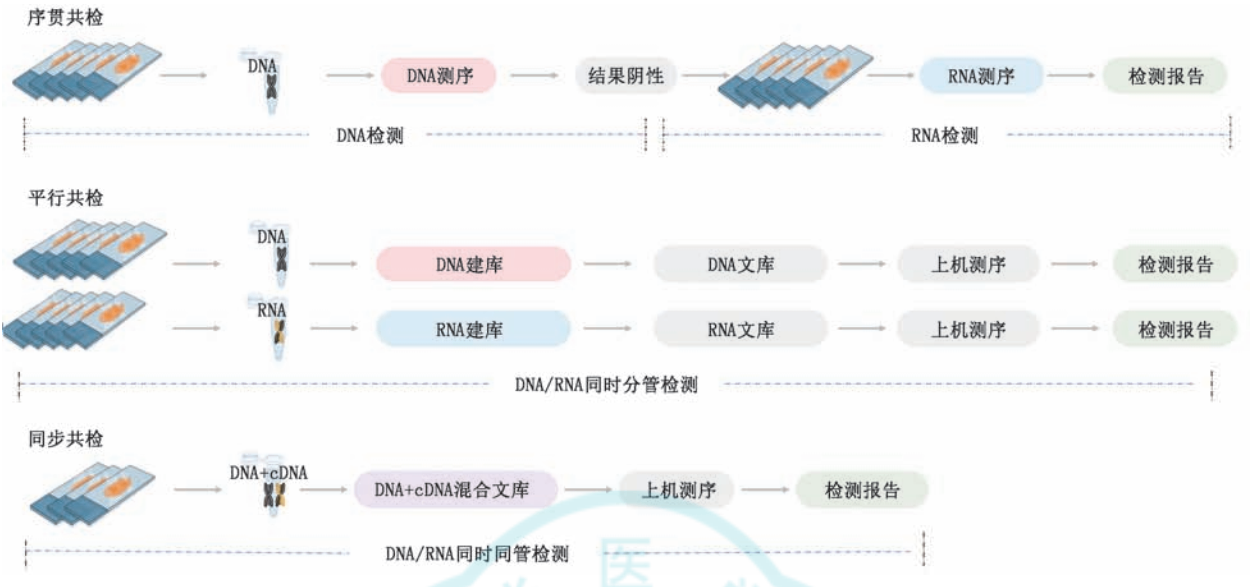
The Expert Consensus on High-Throughput Sequencing of DNA and RNA of Common Driver Genes in Solid Tumors (2025 Edition) mentions that "RNA-NGS can detect an additional 10.0% ~ 15.3% of gene fusion variants," and the consensus also summarizes the strategy for laboratories to conduct DNA and RNA co-detection, mainly divided into sequential co-detection, parallel co-detection, and simultaneous co-detection. Our company adopts the strategy of parallel co-inspection, which not only shortens the longer cycle required for sequential co-inspection but also avoids the possibility of data analysis errors in synchronous co-inspection. We provide patients with faster and more accurate testing services within a cost-controlled range.
图片3.png

Figure 3: Illustration of three strategies for DNA/RNA-NGS co-detection based on expert consensus

Testing advantages


Compared with traditional DNA-NGS detection, second-generation sequencing based on RNA level has a greater advantage in gene fusion detection ability:


一:Technical advantage: natural superiority of detection principle


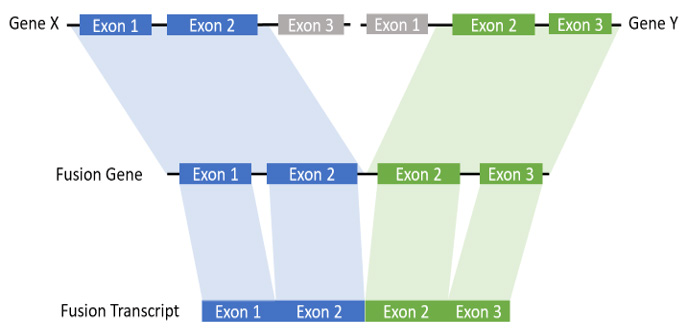
Gene fusion occurs at the DNA level, and its breakpoints are located in the long and structurally complex intron regions; At the RNA level, the fusion gene shows a direct connection between the exons of the two genes. This fundamental difference gives RNA detection a unique technical advantage:

No interference from introns, clear target: RNA will remove introns during post-transcriptional processing, so the fusion site will leave a "short and clean" exon-exon junction. In contrast, DNA detection needs to cross the intron region of hundreds of kilobases (such as ROS1, NTRK genes), and it is difficult to cover the probe.

Unknown fusion partners can be detected: RNA sequencing does not rely on the pre-capture of known breakpoint regions and can discover new fusions and new breakpoints involving unknown partner genes. DNA detection relies heavily on targeted capture of known breakpoint regions, making it difficult to identify unexpected rearrangements.

RNA-based NGS can simultaneously detect splicing mutations: RNA-based NGS can not only detect fusion genes, but also simultaneously identify splicing anomalies such as the 14th exon jump mutation of the MET gene, realizing "one test and many functions".

图片4.png


Figure 4: RNA-based NGS directly covers exon regions without being limited by intron break regions


二:Performance advantages: comprehensive improvement in sensitivity and accuracy


Thanks to the advantages of the above technical principles, RNA detection shows significant advantages in performance indicators:

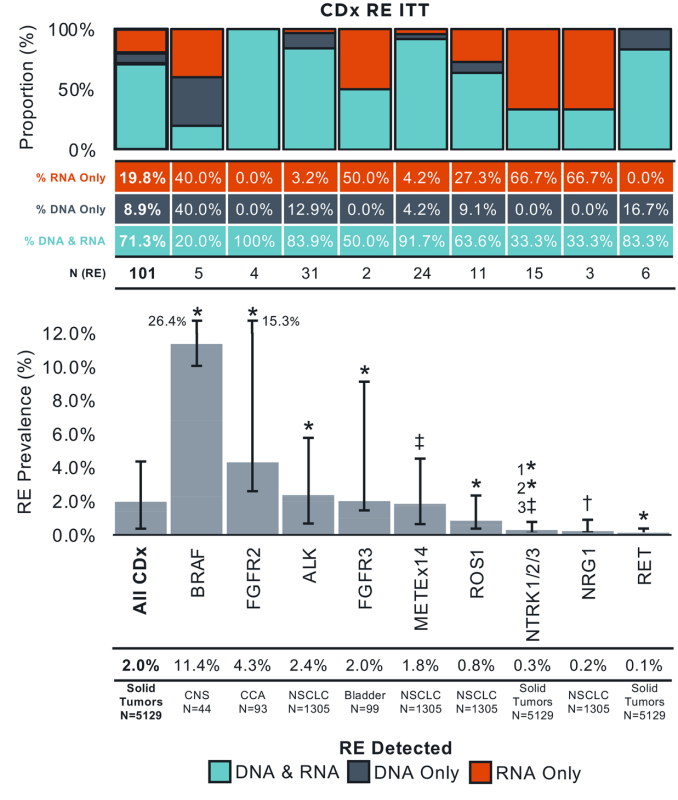
Detection rate increased significantly: Studies have confirmed that in patients with negative driver genes detected by DNA-based NGS, RNA-based NGS can still detect an additional 10.0% to 15.3% of gene fusion mutations. In non-small cell lung cancer, this proportion is 10% to 14%. The detection rate of ROS1 fusion can even be increased by 50%.The detection limit is extremely low: RNA-NGS can detect fusion genes such as NTRK, RET, and ROS1 with a detection limit as low as several copies, and is also sensitive to low-frequency fusion events.Reduce false positives and false negatives: RNA does not contain introns and has a natural advantage over DNA in detecting fusion mutations, which can simultaneously reduce the rates of "false positives" and "false negatives". Some rearrangements of DNA detection may not produce functional transcripts, and the false positive rate can reach 15% ~ 20%; RNA detection directly analyzes the mRNA sequence, which can effectively filter out these non-functional variants.

图片5.png


Figure 5 NGS detection of DNA and RNA binding can ensure the detection of more gene fusions


三:Clinical advantage: Direct guidance for precise treatment decisions


The clinical value of RNA detection lies in its direct correlation with the efficacy of targeted therapy:

Functional verification of fusion gene: RNA detection directly identifies the fusion transcript that has been transcribed and expressed, rather than the fusion gene that may exist but is not expressed at the DNA level. Only patients who produce functional fusion proteins can benefit from targeted therapy. For patients with positive DNA and negative RNA, targeted therapy should be evaluated cautiously.

Expand the population benefiting from targeted therapy: Through the detection of additional fusion mutations missed by DNA detection, RNA detection can give more patients the opportunity to receive targeted therapy for ALK, ROS1, RET, NTRK, etc.
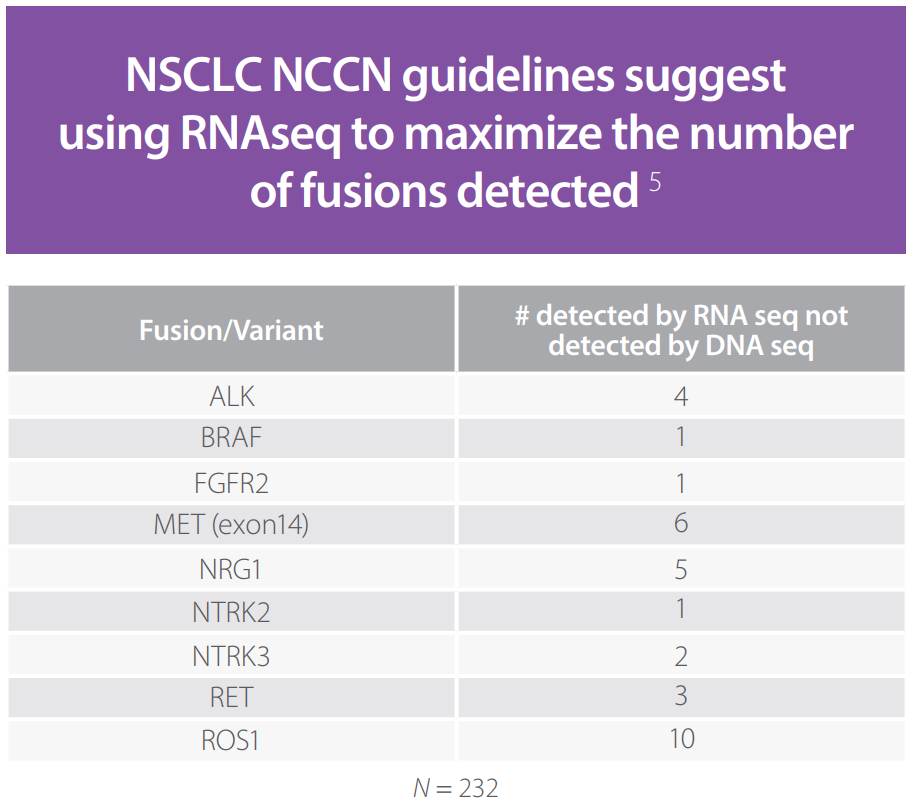

图片6.png


Figure 6 There is still a certain number of gene fusions that can be detected at the RNA level in samples with negative DNA level detection of non-small cell lung cancer


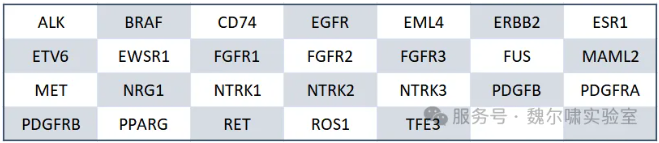
In addition to including all non-small cell lung cancer fusion variant genes in the 26 gene RNA detection package, It also includes common fusion genes in other solid tumors, such as EWSR1 and FUS in sarcoma, TFE3 in renal cell carcinoma, and PPARG in thyroid follicular carcinoma, which can be used in a wide range of scenarios and cover more patient populations.


微信图片_2026-07-27_163736_363.png

Table 1 List of 26 genes for RNA detection in solid tumors


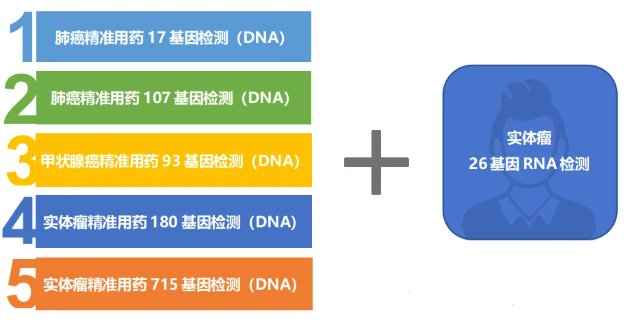
Although RNA-based NGS has advantages in the detection of gene fusion, it is usually recommended to perform DNA-based detection, which is more representative of SNV, deletion insertion and other forms of variation, such as the following package:


640.png


参考文献:

[1]中国初级卫生保健基金会肿瘤精准诊疗专业委员会等. "基于RNA-based NGS检测非小细胞肺癌融合基因临床实践中国专家共识." 中国肺癌杂志 26.11(2023):801-812.

[2]中华医学会病理学分会 & 国家病理质控中心.(2025).实体瘤常见驱动基因DNA和RNA高通量测序共检专家共识(2025版).中华病理学杂志,54(7),701-709.

[3]NCCN Guidelines Version 6.2026 Non-Small Cell Lung Cancer

[4]Keller-Evans, R. B. , Lee, J. K. , Allen, J. M. , Lei, Z. , Ole, G. , & Ross, J. S. , et al. Dna and rna-based next-generation sequencing for companion diagnostic rearrangement detection in solid tumors. The Oncologist(3), 3.

[5]Tan, Y. , Mohanty, V. , Liang, S. , & Dou, J. . (2023). Novornabreak: local assembly for novel splice junction and fusion transcript detection from rna-seq data. Journal of Bioinformatics and Systems Biology, 06(01).

杭州魏尔啸实验室

New product launch - 26-gene RNA detection for solid tumors, improved fusion gene detection, more targeted benefits

2026-07-09 15:18:43

In the era of precision oncology, genetic testing has become the core means of guiding targeted therapy. However, many patients face a dilemma: the DNA level test does not find a drug target, but there is still hope for treatment - the problem may be that the "fusion gene" is missed. In order to meet the clinical needs, our company has launched a 26-gene detection package at the RNA level, which has greatly improved the detection rate and accuracy of gene fusion, and provided more possibilities for targeted drug use for tumor patients.


  • Expert consensus memorization

In clinical practice, non-small cell lung cancer (NSCLC) is the most common type of cancer in which fusion gene detection and targeted drug treatment are effectively combined. The "Chinese Expert Consensus on Clinical Practice of Fusion Gene Detection in Non-small Cell Lung Cancer" summarizes the most common and must-be-examined fusion genes in clinical NSCLC. Our company's solid tumor 26 gene RNA detection product includes all the fusion genes listed in the consensus, and expands to cover more potential detection scope.

图片1.png

Figure 1: Non-small cell lung cancer experts recommend detecting gene fusions

In the NCCN guidelines for non-small cell lung cancer with global guiding value, the expert group emphasized that RNA-based NGS detection can improve the detection rate of new fusion genes, and can be performed simultaneously or sequentially with DNA-based NGS. If the DNA-based molecular spectrum analysis does not identify a recognizable driver oncogene, RNA-based detection is recommended.


图片2.png

Figure 2: NCCN non-small cell lung cancer guidelines recommend RNA-based NGS testing

The Expert Consensus on High-Throughput Sequencing of DNA and RNA of Common Driver Genes in Solid Tumors (2025 Edition) mentions that "RNA-NGS can detect an additional 10.0% ~ 15.3% of gene fusion variants," and the consensus also summarizes the strategy for laboratories to conduct DNA and RNA co-detection, mainly divided into sequential co-detection, parallel co-detection, and simultaneous co-detection. Our company adopts the strategy of parallel co-inspection, which not only shortens the longer cycle required for sequential co-inspection but also avoids the possibility of data analysis errors in synchronous co-inspection. We provide patients with faster and more accurate testing services within a cost-controlled range.

图片3.png

Figure 3: Illustration of three strategies for DNA/RNA-NGS co-detection based on expert consensus

Testing advantages


Compared with traditional DNA-NGS detection, second-generation sequencing based on RNA level has a greater advantage in gene fusion detection ability:


一:Technical advantage: natural superiority of detection principle


Gene fusion occurs at the DNA level, and its breakpoints are located in the long and structurally complex intron regions; At the RNA level, the fusion gene shows a direct connection between the exons of the two genes. This fundamental difference gives RNA detection a unique technical advantage:

No interference from introns, clear target: RNA will remove introns during post-transcriptional processing, so the fusion site will leave a "short and clean" exon-exon junction. In contrast, DNA detection needs to cross the intron region of hundreds of kilobases (such as ROS1, NTRK genes), and it is difficult to cover the probe.

Unknown fusion partners can be detected: RNA sequencing does not rely on the pre-capture of known breakpoint regions and can discover new fusions and new breakpoints involving unknown partner genes. DNA detection relies heavily on targeted capture of known breakpoint regions, making it difficult to identify unexpected rearrangements.

RNA-based NGS can simultaneously detect splicing mutations: RNA-based NGS can not only detect fusion genes, but also simultaneously identify splicing anomalies such as the 14th exon jump mutation of the MET gene, realizing "one test and many functions".


图片4.png


Figure 4: RNA-based NGS directly covers exon regions without being limited by intron break regions


二:Performance advantages: comprehensive improvement in sensitivity and accuracy


Thanks to the advantages of the above technical principles, RNA detection shows significant advantages in performance indicators:

Detection rate increased significantly: Studies have confirmed that in patients with negative driver genes detected by DNA-based NGS, RNA-based NGS can still detect an additional 10.0% to 15.3% of gene fusion mutations. In non-small cell lung cancer, this proportion is 10% to 14%. The detection rate of ROS1 fusion can even be increased by 50%.The detection limit is extremely low: RNA-NGS can detect fusion genes such as NTRK, RET, and ROS1 with a detection limit as low as several copies, and is also sensitive to low-frequency fusion events.Reduce false positives and false negatives: RNA does not contain introns and has a natural advantage over DNA in detecting fusion mutations, which can simultaneously reduce the rates of "false positives" and "false negatives". Some rearrangements of DNA detection may not produce functional transcripts, and the false positive rate can reach 15% ~ 20%; RNA detection directly analyzes the mRNA sequence, which can effectively filter out these non-functional variants.


图片5.png


Figure 5 NGS detection of DNA and RNA binding can ensure the detection of more gene fusions


三:Clinical advantage: Direct guidance for precise treatment decisions


The clinical value of RNA detection lies in its direct correlation with the efficacy of targeted therapy:

Functional verification of fusion gene: RNA detection directly identifies the fusion transcript that has been transcribed and expressed, rather than the fusion gene that may exist but is not expressed at the DNA level. Only patients who produce functional fusion proteins can benefit from targeted therapy. For patients with positive DNA and negative RNA, targeted therapy should be evaluated cautiously.

Expand the population benefiting from targeted therapy: Through the detection of additional fusion mutations missed by DNA detection, RNA detection can give more patients the opportunity to receive targeted therapy for ALK, ROS1, RET, NTRK, etc.


图片6.png


Figure 6 There is still a certain number of gene fusions that can be detected at the RNA level in samples with negative DNA level detection of non-small cell lung cancer


In addition to including all non-small cell lung cancer fusion variant genes in the 26 gene RNA detection package, It also includes common fusion genes in other solid tumors, such as EWSR1 and FUS in sarcoma, TFE3 in renal cell carcinoma, and PPARG in thyroid follicular carcinoma, which can be used in a wide range of scenarios and cover more patient populations.


微信图片_2026-07-27_163736_363.png

Table 1 List of 26 genes for RNA detection in solid tumors


Although RNA-based NGS has advantages in the detection of gene fusion, it is usually recommended to perform DNA-based detection, which is more representative of SNV, deletion insertion and other forms of variation, such as the following package:


640.png


参考文献:

[1]中国初级卫生保健基金会肿瘤精准诊疗专业委员会等. "基于RNA-based NGS检测非小细胞肺癌融合基因临床实践中国专家共识." 中国肺癌杂志 26.11(2023):801-812.

[2]中华医学会病理学分会 & 国家病理质控中心.(2025).实体瘤常见驱动基因DNA和RNA高通量测序共检专家共识(2025版).中华病理学杂志,54(7),701-709.

[3]NCCN Guidelines Version 6.2026 Non-Small Cell Lung Cancer

[4]Keller-Evans, R. B. , Lee, J. K. , Allen, J. M. , Lei, Z. , Ole, G. , & Ross, J. S. , et al. Dna and rna-based next-generation sequencing for companion diagnostic rearrangement detection in solid tumors. The Oncologist(3), 3.

[5]Tan, Y. , Mohanty, V. , Liang, S. , & Dou, J. . (2023). Novornabreak: local assembly for novel splice junction and fusion transcript detection from rna-seq data. Journal of Bioinformatics and Systems Biology, 06(01).

版权所有 @ Virchow laboratories Group  浙ICP备2025185693号  杭州魏尔啸医学检验实验室有限公司
社会责任  |  法律声明
版权所有 @ Virchow laboratories Group
浙ICP备2025185693号
杭州魏尔啸医学检验实验室有限公司
+86-(0)571-85819650  |  +86-(0)17767210259
社会责任  |  法律声明