

CN EN
X
CN EN
In a medical examination report that can span dozens of pages, which items are closely related to tumors?

2026-05-12 15:34:05

Many people are accustomed to flipping directly to the 'Summary' section at the beginning of their medical report. Upon seeing 'No significant abnormalities detected,' they let out a sigh of relief and file the report away in a drawer. But did you know? Some 'clues' related to tumors are not explicitly stated in the summary—they are hidden within the details of various examination items.


This article highlights the key points: When facing a report spanning dozens of pages, which sections should you focus on to ensure you don't miss any early warning signs of tumors.


微信图片_2026-05-12_114332_774.png

Start by mastering 'layered reading


Layer 1: First review the 'Abnormality Summary' and 'Doctor's Recommendations' pages


This is typically the summary page located at the very beginning or end of the report. Here, doctors will note phrases such as 'follow-up examination recommended,' 'regular monitoring required,' or 'further testing needed.' Whenever you see these terms, regardless of how healthy you feel, take them seriously.


Layer 2: Focus on scanning the 'Three Highs' indicators

Body weight, blood pressure, blood sugar, blood lipids, uric acid, and liver/kidney function — these are the core components of metabolic syndrome and the foundation for cardiovascular diseases and certain tumors (such as liver cancer and pancreatic cancer). Once these numbers start 'turning red,' it's a clear signal that lifestyle adjustments are needed.


Layer 3: Understand 'Tumor Markers' and Imaging Descriptions


This is the section most likely to cause alarm. Remember two key points:

1. Slightly elevated tumor markers ≠ cancer: Inflammation, polyps, and benign growths can all cause temporary increases in values.

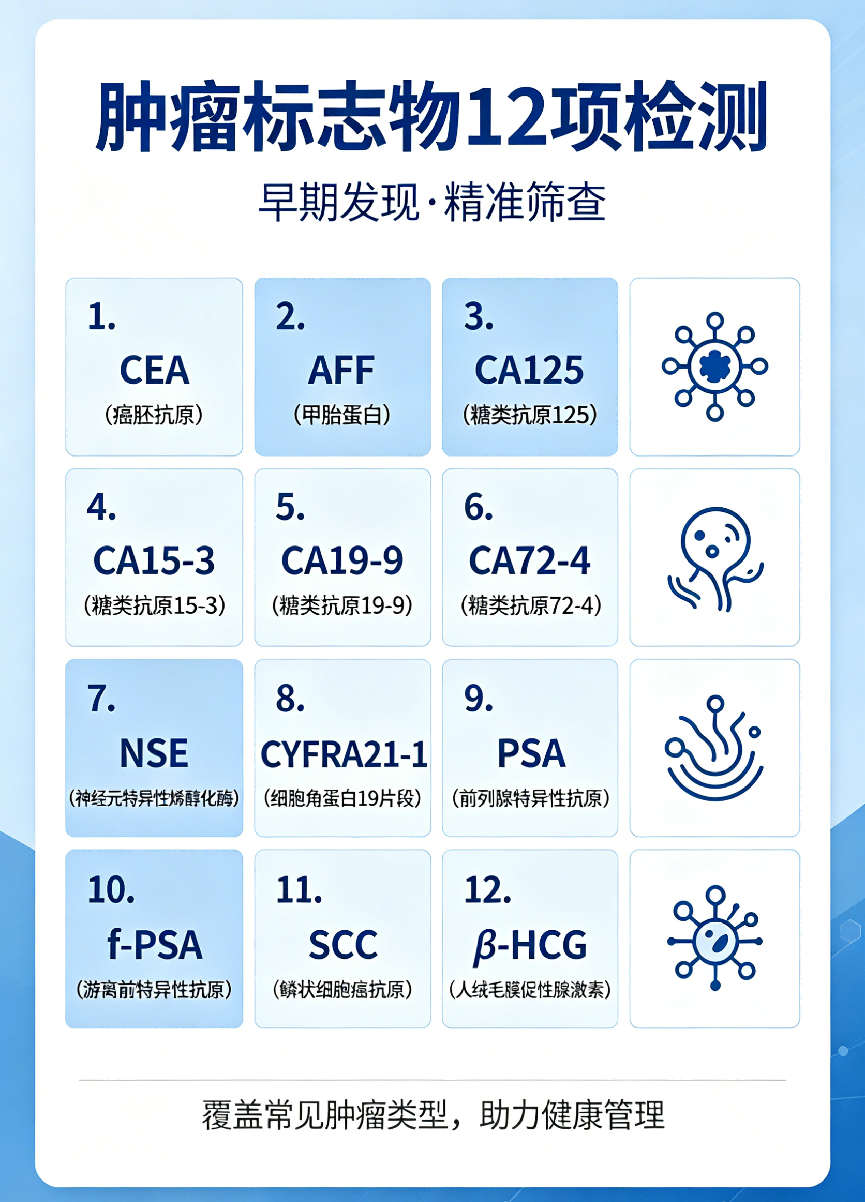
2. Normal tumor markers ≠ no cancer: Many early-stage cancer patients have normal marker levels, so imaging and endoscopic examinations must be considered together. For most basic physical examination packages, the number of detectable tumor markers is limited. Some packages exclude them to reduce costs, offering them only as add-on options that require extra payment or are included in premium packages. Test-takers should understand this beforehand before deciding whether to include these tests.

图片1.png


Similarly, if terms such as 'nodules,' 'space-occupying lesions,' or 'ground-glass opacities' appear in ultrasound or CT reports, there is no need to panic immediately, but follow medical advice to determine the follow-up schedule.


The items in a routine physical examination are actually helping you 'defuse mines


Beyond the most direct tumor markers, many tests we consider 'ordinary' actually conceal early cancer screening functions:


  • Physical Examination: The physician's "inspection, palpation, percussion, and auscultation" can uncover numerous clues. For example, the digital rectal examination performed by surgeons is the most direct method for detecting low rectal cancer; internal medicine physicians palpating the neck can screen for thyroid nodules and abnormal lymph nodes; gynecological internal examinations and breast palpation can detect masses that even ultrasound might miss.


  • Laboratory Tests: Urinalysis can indicate urinary system issues; stool routine plus occult blood test is the simplest initial screening for colorectal cancer — those with positive results must follow up with colonoscopy; if complete blood count shows unexplained chronic anemia, it may also signal gastrointestinal tumors causing "chronic blood loss."


  • Auxiliary Examinations: X-rays have limited value for lung cancer screening; ultrasound is a common initial screening tool for thyroid, breast, and abdominal/pelvic organ tumors.

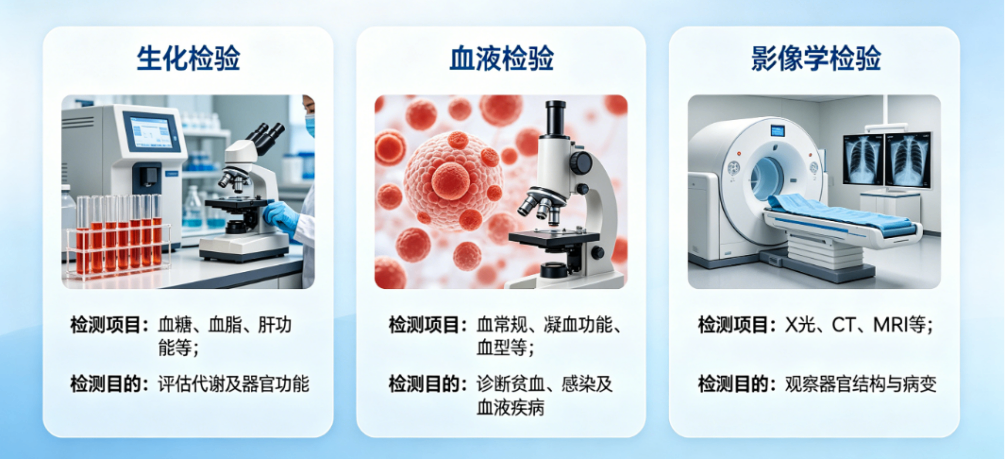
Biochemical, blood, and imaging tests serve as auxiliary screening methods for some cancers, while for others they represent the "gold standard" of screening.

图片2.png


Key Focus: 8 Common Cancers — Which 'Gold Standard' Screening Method Should Be Used?


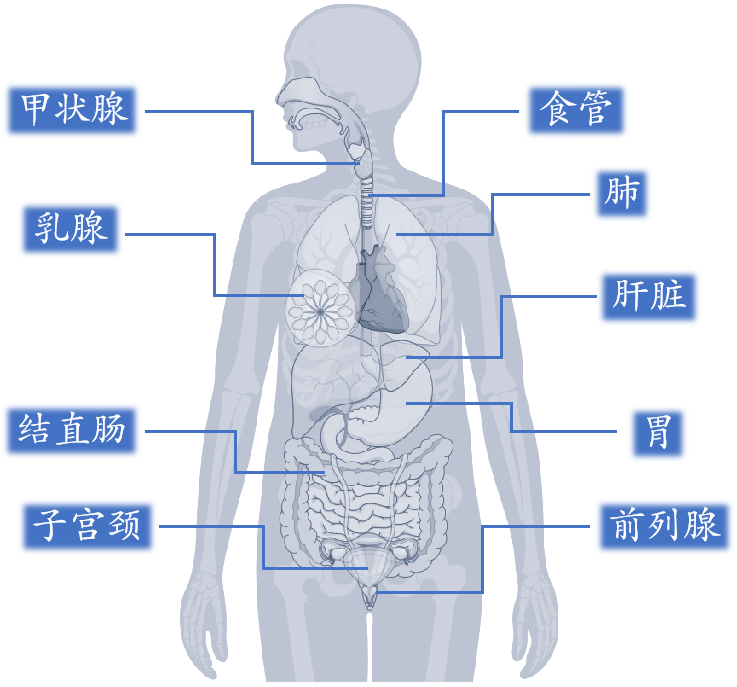
For the types of cancer that are most prevalent among Chinese people and for which relatively mature screening methods exist, the following lists the high-risk populations for these cancers, along with the corresponding gold-standard screening protocols and important considerations.


1. Lung Cancer — Skip Chest X-rays, Get Low-Dose Spiral CT Instead

High-Risk Population: Over 40 years old AND smoking ≥20 years (or quit less than 15 years ago); long-term secondhand smoke exposure; occupational exposure history (asbestos, radon, etc.); chronic lung disease or family history of lung cancer.

"Gold Standard": Low-dose spiral CT (LDCT). It provides much finer visualization than X-ray and can detect early small lesions.

Associated Marker Reference: NSE, ProGRP, CYFRA21-1, SCC, CEA. Note: These indicators cannot serve as standalone diagnostic basis, but elevation requires further investigation.


2. Colorectal Cancer — Don't Fear Colonoscopy, It Can Directly "Defuse the Bomb"

High-Risk Population: Over 45 years old; family history of colorectal cancer; long-term ulcerative colitis patients; history of intestinal polyps or adenomas.

"Gold Standard": Colonoscopy. General population should undergo first screening at age 45; if results are completely normal, repeat every 5-10 years. Polyps discovered during the procedure can be removed on-site, serving as "preventive treatment."

Non-invasive Initial Screening: Annual fecal occult blood test; if positive, colonoscopy follow-up is mandatory.


3. Thyroid Cancer — Neck Ultrasound Is Sufficient, Avoid "Over-Screening"

High-Risk Population: Childhood head/neck radiation exposure history; thyroid nodules >1 cm with rapid growth; family history.

"Gold Standard": High-resolution neck ultrasound. General population needs only once annually; if suspicious nodules are found, follow physician advice for biopsy.


4. Liver Cancer — Check "Blood + Ultrasound" Every Six Months, Monitor These Two Items

High-Risk Population: Hepatitis B/C infection, liver cirrhosis, family history of liver cancer, alcoholic or non-alcoholic fatty liver disease patients.

"Gold Standard": Serum alpha-fetoprotein (AFP) + liver ultrasound. High-risk individuals should be tested every 6 months — this is the only screening combination proven to reduce liver cancer mortality.


5. Gastric Cancer — Don't Waste the Advantage of Being a "Gastroscopy Powerhouse"

High-Risk Population: Over 40 years old with residence history in high-incidence areas; Helicobacter pylori (Hp) infection; atrophic gastritis, gastric ulcer, or gastric polyp patients; family history of gastric cancer.

"Gold Standard": Gastroscopy. High-risk individuals should undergo regular examinations per physician instructions — this is the most direct weapon for detecting early gastric cancer.


6. Breast Cancer — Age 40 Is a Turning Point

High-Risk Population: Family history of breast cancer/ovarian cancer; BRCA1/BRCA2 mutation carriers; received chest radiation therapy before age 30.

Screening Recommendations:

  • Average-risk women: Annual breast ultrasound.

  • Starting at age 40: Add mammography every 1-2 years. Combining both methods can more accurately detect microcalcifications and masses.


7. Esophageal Cancer — Those Who Love Hot Foods Should Pay Extra Attention

High-Risk Population: From high-incidence areas, family history, long-term smoking/alcohol consumption/preference for hot foods.

"Gold Standard": Gastroscopy (simultaneously examines the esophagus). High-risk individuals should undergo screening every 2 years; if pathology indicates dysplasia, shorten to annually.


8. Cervical Cancer — Even With Vaccination, Don't Forget Screening

"Gold Standard": Combined screening with high-risk HPV testing + cervical cytology (TCT).

Screening Schedule:

  • Ages 21-29: TCT every 3 years.

  • Ages 30-65: Combined screening every 5 years; if results are continuously negative, the interval can be appropriately extended.

图片3.png

Many people believe that health checkups are a waste of money or time, and that only older adults should undergo regular examinations — but this is a serious misconception.

The focus of health screenings varies by age group, and the content of concern differs from person to person. In recent years, various diseases have shown a trend toward younger onset, with colorectal cancer and gastric cancer emerging increasingly among younger populations, while the incidence of thyroid cancer continues to climb steadily. These trends warrant greater attention.

We hope this article will encourage you to pay closer attention to your own health and that of your family members, to identify danger signals promptly, and to eliminate threats while they are still in their nascent stages.


杭州魏尔啸实验室

In a medical examination report that can span dozens of pages, which items are closely related to tumors?

2026-05-12 15:34:05

Many people are accustomed to flipping directly to the 'Summary' section at the beginning of their medical report. Upon seeing 'No significant abnormalities detected,' they let out a sigh of relief and file the report away in a drawer. But did you know? Some 'clues' related to tumors are not explicitly stated in the summary—they are hidden within the details of various examination items.


This article highlights the key points: When facing a report spanning dozens of pages, which sections should you focus on to ensure you don't miss any early warning signs of tumors.


微信图片_2026-05-12_114332_774.png

Start by mastering 'layered reading


Layer 1: First review the 'Abnormality Summary' and 'Doctor's Recommendations' pages


This is typically the summary page located at the very beginning or end of the report. Here, doctors will note phrases such as 'follow-up examination recommended,' 'regular monitoring required,' or 'further testing needed.' Whenever you see these terms, regardless of how healthy you feel, take them seriously.


Layer 2: Focus on scanning the 'Three Highs' indicators

Body weight, blood pressure, blood sugar, blood lipids, uric acid, and liver/kidney function — these are the core components of metabolic syndrome and the foundation for cardiovascular diseases and certain tumors (such as liver cancer and pancreatic cancer). Once these numbers start 'turning red,' it's a clear signal that lifestyle adjustments are needed.


Layer 3: Understand 'Tumor Markers' and Imaging Descriptions


This is the section most likely to cause alarm. Remember two key points:

1. Slightly elevated tumor markers ≠ cancer: Inflammation, polyps, and benign growths can all cause temporary increases in values.

2. Normal tumor markers ≠ no cancer: Many early-stage cancer patients have normal marker levels, so imaging and endoscopic examinations must be considered together. For most basic physical examination packages, the number of detectable tumor markers is limited. Some packages exclude them to reduce costs, offering them only as add-on options that require extra payment or are included in premium packages. Test-takers should understand this beforehand before deciding whether to include these tests.


图片1.png


Similarly, if terms such as 'nodules,' 'space-occupying lesions,' or 'ground-glass opacities' appear in ultrasound or CT reports, there is no need to panic immediately, but follow medical advice to determine the follow-up schedule.


The items in a routine physical examination are actually helping you 'defuse mines


Beyond the most direct tumor markers, many tests we consider 'ordinary' actually conceal early cancer screening functions:


  • Physical Examination: The physician's "inspection, palpation, percussion, and auscultation" can uncover numerous clues. For example, the digital rectal examination performed by surgeons is the most direct method for detecting low rectal cancer; internal medicine physicians palpating the neck can screen for thyroid nodules and abnormal lymph nodes; gynecological internal examinations and breast palpation can detect masses that even ultrasound might miss.


  • Laboratory Tests: Urinalysis can indicate urinary system issues; stool routine plus occult blood test is the simplest initial screening for colorectal cancer — those with positive results must follow up with colonoscopy; if complete blood count shows unexplained chronic anemia, it may also signal gastrointestinal tumors causing "chronic blood loss."


  • Auxiliary Examinations: X-rays have limited value for lung cancer screening; ultrasound is a common initial screening tool for thyroid, breast, and abdominal/pelvic organ tumors.

Biochemical, blood, and imaging tests serve as auxiliary screening methods for some cancers, while for others they represent the "gold standard" of screening.


图片2.png


Key Focus: 8 Common Cancers — Which 'Gold Standard' Screening Method Should Be Used?


For the types of cancer that are most prevalent among Chinese people and for which relatively mature screening methods exist, the following lists the high-risk populations for these cancers, along with the corresponding gold-standard screening protocols and important considerations.


1. Lung Cancer — Skip Chest X-rays, Get Low-Dose Spiral CT Instead

High-Risk Population: Over 40 years old AND smoking ≥20 years (or quit less than 15 years ago); long-term secondhand smoke exposure; occupational exposure history (asbestos, radon, etc.); chronic lung disease or family history of lung cancer.

"Gold Standard": Low-dose spiral CT (LDCT). It provides much finer visualization than X-ray and can detect early small lesions.

Associated Marker Reference: NSE, ProGRP, CYFRA21-1, SCC, CEA. Note: These indicators cannot serve as standalone diagnostic basis, but elevation requires further investigation.


2. Colorectal Cancer — Don't Fear Colonoscopy, It Can Directly "Defuse the Bomb"

High-Risk Population: Over 45 years old; family history of colorectal cancer; long-term ulcerative colitis patients; history of intestinal polyps or adenomas.

"Gold Standard": Colonoscopy. General population should undergo first screening at age 45; if results are completely normal, repeat every 5-10 years. Polyps discovered during the procedure can be removed on-site, serving as "preventive treatment."

Non-invasive Initial Screening: Annual fecal occult blood test; if positive, colonoscopy follow-up is mandatory.


3. Thyroid Cancer — Neck Ultrasound Is Sufficient, Avoid "Over-Screening"

High-Risk Population: Childhood head/neck radiation exposure history; thyroid nodules >1 cm with rapid growth; family history.

"Gold Standard": High-resolution neck ultrasound. General population needs only once annually; if suspicious nodules are found, follow physician advice for biopsy.


4. Liver Cancer — Check "Blood + Ultrasound" Every Six Months, Monitor These Two Items

High-Risk Population: Hepatitis B/C infection, liver cirrhosis, family history of liver cancer, alcoholic or non-alcoholic fatty liver disease patients.

"Gold Standard": Serum alpha-fetoprotein (AFP) + liver ultrasound. High-risk individuals should be tested every 6 months — this is the only screening combination proven to reduce liver cancer mortality.


5. Gastric Cancer — Don't Waste the Advantage of Being a "Gastroscopy Powerhouse"

High-Risk Population: Over 40 years old with residence history in high-incidence areas; Helicobacter pylori (Hp) infection; atrophic gastritis, gastric ulcer, or gastric polyp patients; family history of gastric cancer.

"Gold Standard": Gastroscopy. High-risk individuals should undergo regular examinations per physician instructions — this is the most direct weapon for detecting early gastric cancer.


6. Breast Cancer — Age 40 Is a Turning Point

High-Risk Population: Family history of breast cancer/ovarian cancer; BRCA1/BRCA2 mutation carriers; received chest radiation therapy before age 30.

Screening Recommendations:

  • Average-risk women: Annual breast ultrasound.

  • Starting at age 40: Add mammography every 1-2 years. Combining both methods can more accurately detect microcalcifications and masses.


7. Esophageal Cancer — Those Who Love Hot Foods Should Pay Extra Attention

High-Risk Population: From high-incidence areas, family history, long-term smoking/alcohol consumption/preference for hot foods.

"Gold Standard": Gastroscopy (simultaneously examines the esophagus). High-risk individuals should undergo screening every 2 years; if pathology indicates dysplasia, shorten to annually.


8. Cervical Cancer — Even With Vaccination, Don't Forget Screening

"Gold Standard": Combined screening with high-risk HPV testing + cervical cytology (TCT).

Screening Schedule:

  • Ages 21-29: TCT every 3 years.

  • Ages 30-65: Combined screening every 5 years; if results are continuously negative, the interval can be appropriately extended.


图片3.png

Many people believe that health checkups are a waste of money or time, and that only older adults should undergo regular examinations — but this is a serious misconception.

The focus of health screenings varies by age group, and the content of concern differs from person to person. In recent years, various diseases have shown a trend toward younger onset, with colorectal cancer and gastric cancer emerging increasingly among younger populations, while the incidence of thyroid cancer continues to climb steadily. These trends warrant greater attention.

We hope this article will encourage you to pay closer attention to your own health and that of your family members, to identify danger signals promptly, and to eliminate threats while they are still in their nascent stages.


版权所有 @ Virchow laboratories Group  浙ICP备2025185693号  杭州魏尔啸医学检验实验室有限公司
社会责任  |  法律声明
版权所有 @ Virchow laboratories Group
浙ICP备2025185693号
杭州魏尔啸医学检验实验室有限公司
+86-(0)571-85819650  |  +86-(0)17767210259
社会责任  |  法律声明